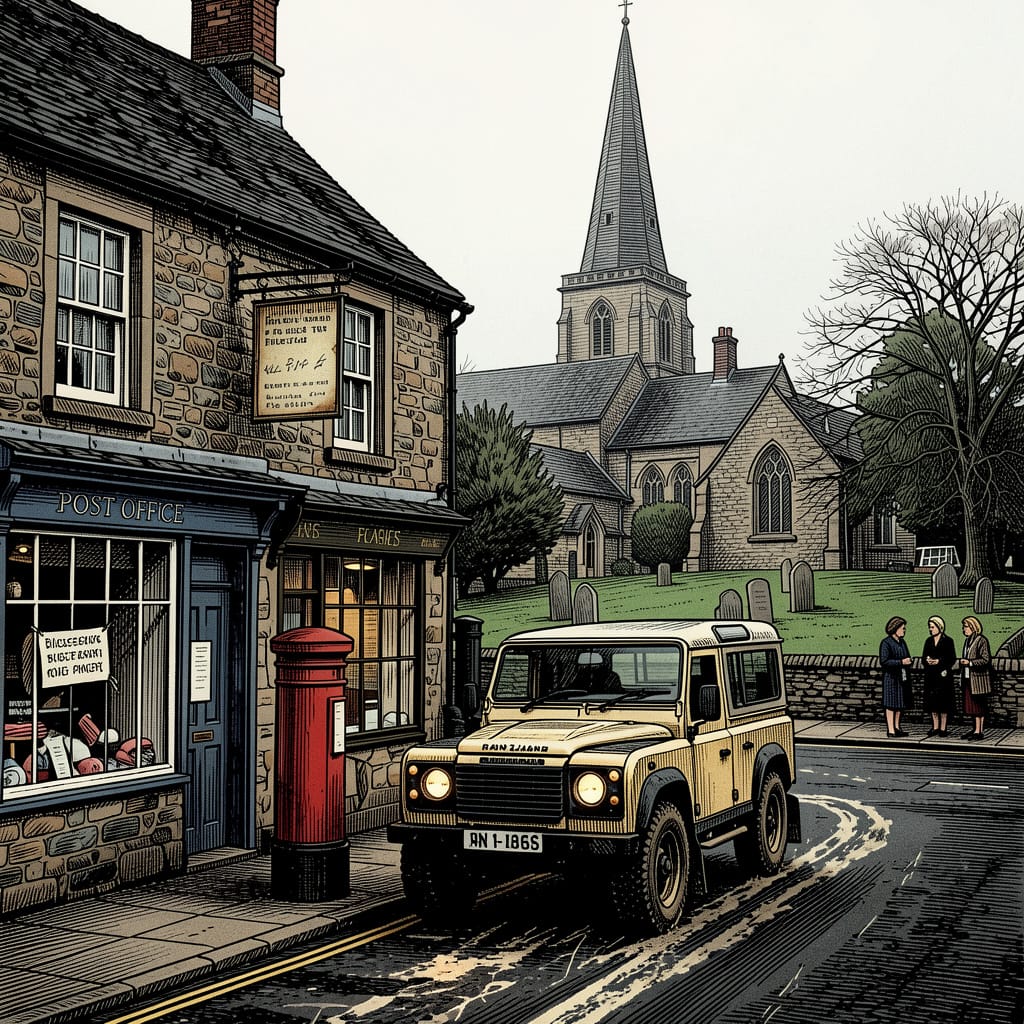
The post office and green are, for most of Cambion, simply the village being the village — the surface against which the saga's undercurrents are measured. But the same ordinary frontage is also part of the surveillance landscape around Robert Knight.
The post office produces one of the few unguarded civilian observations of Robert that ever reaches paper: a handwritten complaint about strange electrical interference whenever the Knight boy stands near the scales. It never reaches anyone who could act on it — Declan Marsden pulls it from a pile of intercepted mail and feeds it to the shredder, one more small trace tidied away. And Phillip Lawson, watching the family on his own account, is noted moving through the same civic spaces — talking to the man who runs the post office, to a council contact, to the new headteacher — the ordinary rounds of a man quietly building a picture.
The juxtaposition is the point. The Hope's End of the post office queue and the green is real; so is the Hope's End of intercepted mail and watchers parked near the bakery. They share the same few streets, and neither quite knows how much of the other it has learned not to see.