

Peter Binsfeld

Peter Binsfeld — demonologist; Bishop of Trier

Profile
Type Historical Figure; Demonologist
Active Late sixteenth century
Known For Binsfeld's Classification of Demons — assigning a demon to each of the Seven Deadly Sins
Role in Saga His taxonomy is the classification framework Declan Marsden uses to identify the Seven
First Appearance Cambion, Book One · Book of Thoth Saga

Peter Binsfeld

"Not metaphor. Not morality. Taxonomy."


Overview

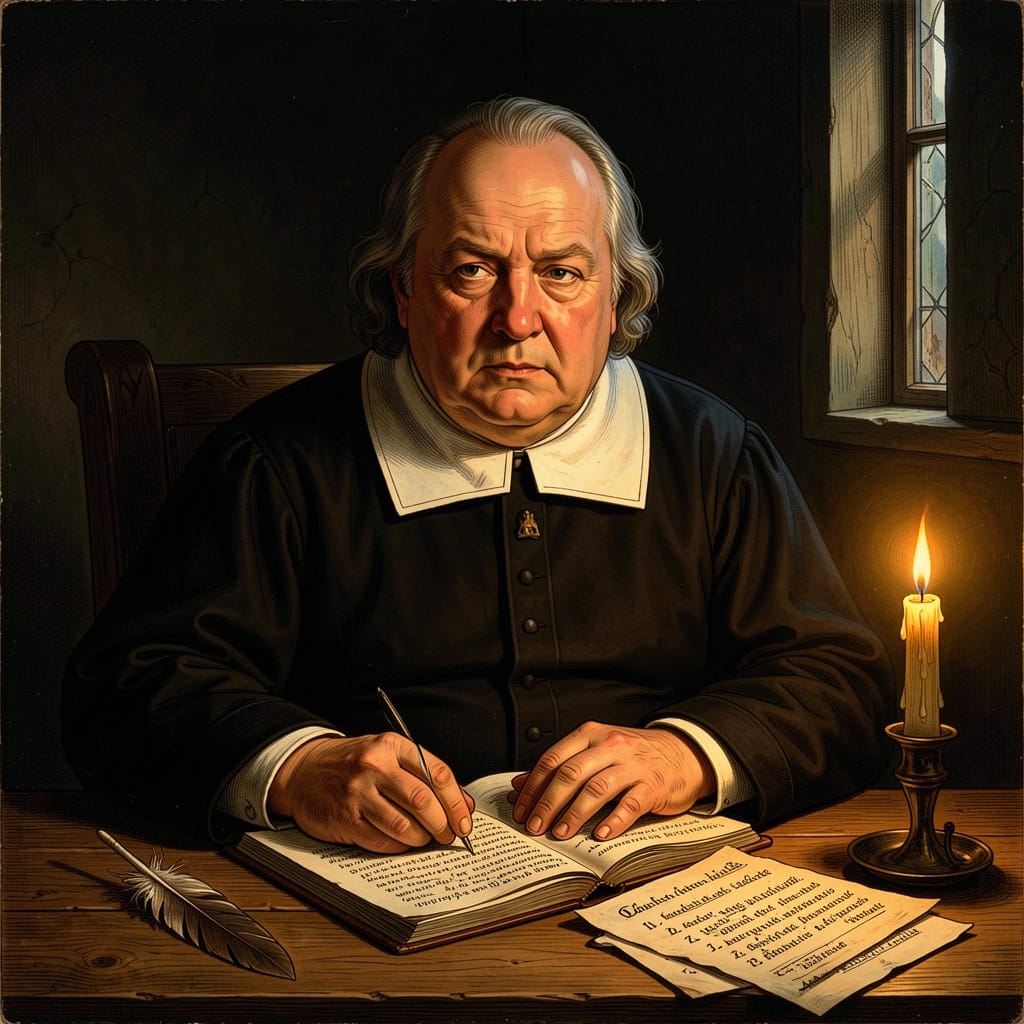
Peter Binsfeld was a sixteenth-century German theologian and demonologist, auxiliary Bishop of Trier, whose 1589 work Tractatus de confessionibus maleficorum et sagarum established what became known as Binsfeld's Classification — an assignment of a specific demon to each of the Seven Deadly Sins. The classification appears in Declan Marsden's research files and in Daniel Marsden's late-night reading of his father's documentation as a typewritten sheet headed simply BINSFELD — impassive as cold glass.

Daniel does not know what it means at first. It sounds German, maybe. Or made-up. But someone typed it like it was important, like it was a name everyone should know. The note beside the seven sins listed below the name is in pen, denting the paper: Not metaphor. Not morality. Taxonomy. This single correction is the hinge of the saga's demonological framework: the Seven are not allegorical. They are an operational fact. Binsfeld's classification is not theology. It is a directory.

Binsfeld's Classification as Used in the Saga

The Binsfeld classification as it appears in Declan's files assigns the following correspondences, each marked with its own symbol in what appears to be medieval script:

Each entry in Declan's version is annotated in red pen with a single letter: B. The same letter Declan circles over and over in his notes, pressing through the page. In the saga's usage, Asmodeus is identified specifically as Prince of Lust in the Binsfeld taxonomy — the third of the Seven, corresponding to Luxuria.

Helen Marsden's analysis extended the taxonomy into operational use: each of the Seven mapped to a function in the coordinated breeding programme she suspected — Superbia coordinating, Avaritia resourcing, Luxuria seducing cooperation, Gula consuming evidence, Invidia isolating targets, Ira executing dissenters, Acedia ensuring no one cares enough to stop them. Binsfeld's classification gave her the framework. The Knight family gave her the test case.


Trivia

  • The historical Peter Binsfeld was directly involved in the Trier witch trials of 1587–1593, one of the largest witch trials in German history. He argued that the confessions of accused witches — even those obtained under torture — were admissible evidence. His classification work and his prosecutorial role are part of the same intellectual project: the systematic organisation of demonic threat. The saga uses his taxonomy but not his trial record.
  • The sheet Daniel reads is typewritten — mechanically produced, formatted like official documentation, the sins in a numbered list with Latin names and English translations. Someone in Beowulf's administrative structure treated Binsfeld's classification as reference material precise enough to standardise. The typewritten format is the document's most quietly disturbing quality.
  • The symbols beside each sin in the document are described as strange letters, not English, not anything Daniel has seen — old, medieval, like illuminated manuscripts. These are likely the sigils associated with each demonic entity in the tradition Binsfeld drew on. The Asmodeus sigil from the Ars Goetia is the specific symbol described in detail in Cambion — the mark carved into Helen Marsden's skin.

Appearances

Title Role Notes
Cambion
Book One · Book of Thoth Saga
Referenced Classification Framework His taxonomy appears as a typewritten document in Declan Marsden's files, read by Daniel. Referenced explicitly by Declan when identifying Asmodeus as Prince of Lust in the Binsfeld taxonomy — the third of the Seven. His classification is the operational framework both Declan and Helen use to organise and name the entities they are investigating.