Marple's single scene in Cambion is also the moment the saga's own title surfaces inside the story it names — but by the time it happens, in Chapter Thirty-Eight: The Null Hypothesis, the phrase ‘Book of Thoth’ has already done real work elsewhere in the book, unknown to the person who is about to rediscover it from scratch.
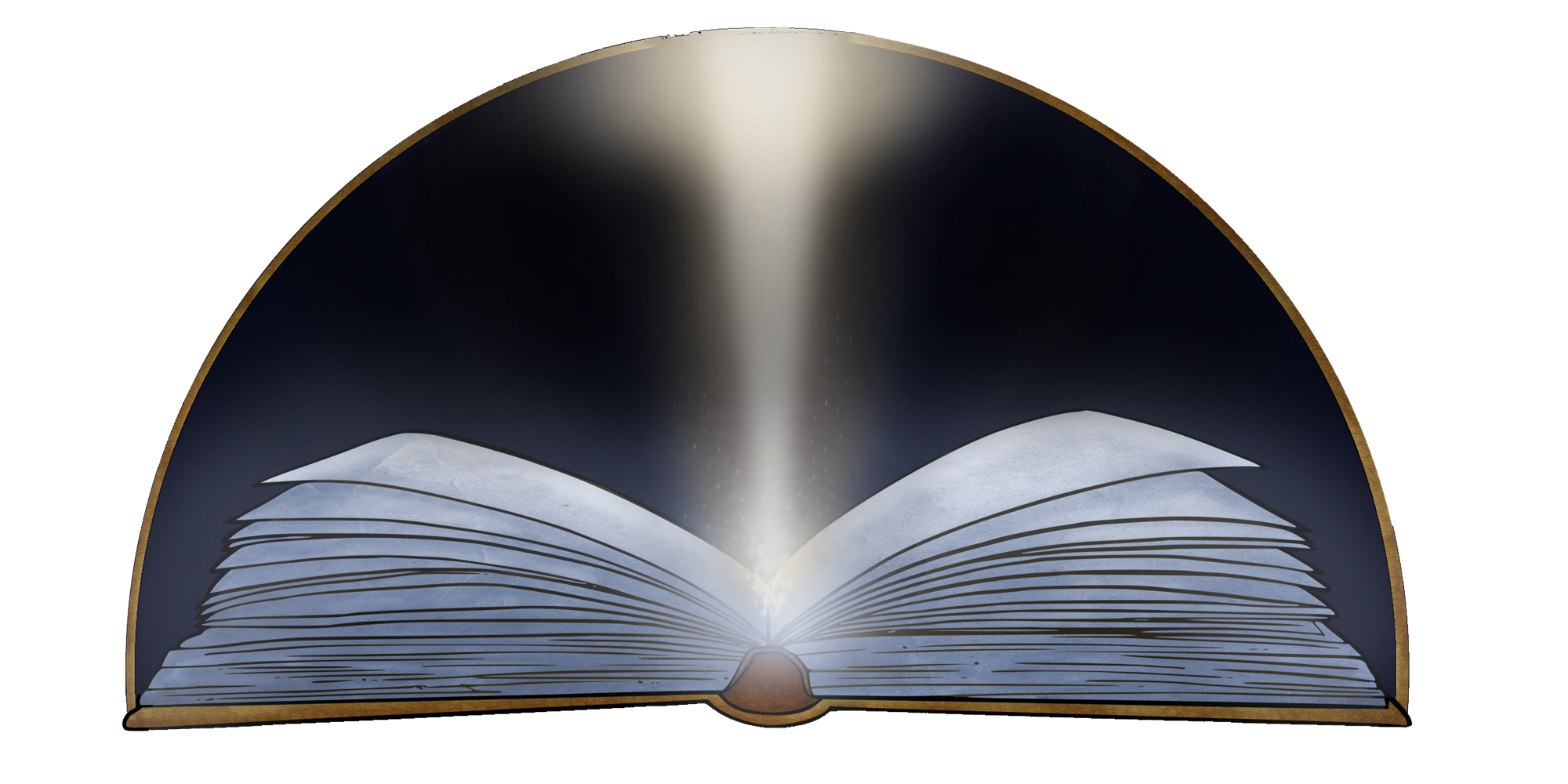
Years earlier, in Chapter Nine: The Weight of Safe, Toby tells Robert the myth itself: Thoth's book, hidden at the bottom of the Nile in a casket bound by chains and curses, promising the language of every creature and the power of the gods; the prince Neferkaptah who stole it and lost his wife and child for the theft; the later thief, Setne Khaemwaset, forced to crawl back and return what he had taken. Toby tells it gently, as a story about wanting things you should not reach for — not as anything he expects Robert to apply to himself.
By Chapter Twelve: Redacted Saints, the phrase has hardened into institutional jargon. A Beowulf analyst comment, reproduced among the saga's document inserts, assesses an ‘Ignition’ event as probable and notes that, provided the Token remains within the Knight household, and the child demonstrates Thoth-capability, the location must be treated as a convergence point for extinction-class scenarios. Whatever Robert is, the organisations watching him already have a name for it, filed and classified, long before anyone outside their circle goes looking.
By Chapter Twenty-Six: Helen Veto, Declan Marsden is using the phrase as a weapon. Discussing a plan to leak doctored Beowulf documents and point Orion toward a false trail at Glastonbury, he tells his Handler flatly that “The Book of Thoth… It's a fable. Nothing more,” and when she presses him — “You don't believe that” — he answers that it does not matter what he believes, only what Orion can be made to believe. The exchange leaves deliberately open whether Declan is lying to her, or repeating a lie he has told himself for years.
None of this is available to Daniel Marsden when he takes three buses to Marple's library, avoiding Buxton (where the reference librarian, Mr Calloway, has started to recognise his face) and Chapel-en-le-Frith (where Robert and his uncles sometimes go for home-schooling outings). He has just crossed out his own working hypothesis — NEPHILIM, scored through — because the theory demanded a monster of physical dominance, and the boy he has actually observed is one of physical collapse. On the mythology shelf, in a battered copy of Myths of Ancient Egypt, he finds the same myth Toby told years before, the same word Beowulf had already filed under, the same fable Declan had already weaponised — and arrives at it as though for the first time:
Thoth is the author of the ‘Book of Thoth’, a legendary repository of all knowledge. It is said the book grants the reader the ability to understand the speech of animals, to perceive the gods in their true forms, and to command the earth and the sky.
— Myths of Ancient Egypt, quoted in Cambion, Chapter Thirty-Eight.
A second passage describes the book's containment — sealed inside box after box, iron within bronze within ivory and ebony within gold. Daniel thinks of his own index card: Event: The Garden Fence. Detail: Robert touched the iron. No burn. If Robert isn't a demon repelled by iron, he reasons, then perhaps he is the thing iron is meant to keep in. He writes, hedging even as he writes it: this might be a massive coincidence, and I am probably just tired … but what if it isn't … check it anyway.