Luton

Luton, Bedfordshire

Location Profile
Type Town
County Bedfordshire (unitary authority since 1997)
Known For The hat trade; Vauxhall Motors; London Luton Airport
Distance from London c. 32 miles north-northwest
First Appearance Cambion, Chapter Thirty-Five: Where Wild Roses Grow

Luton

Town in Bedfordshire, north-west of London.


Overview

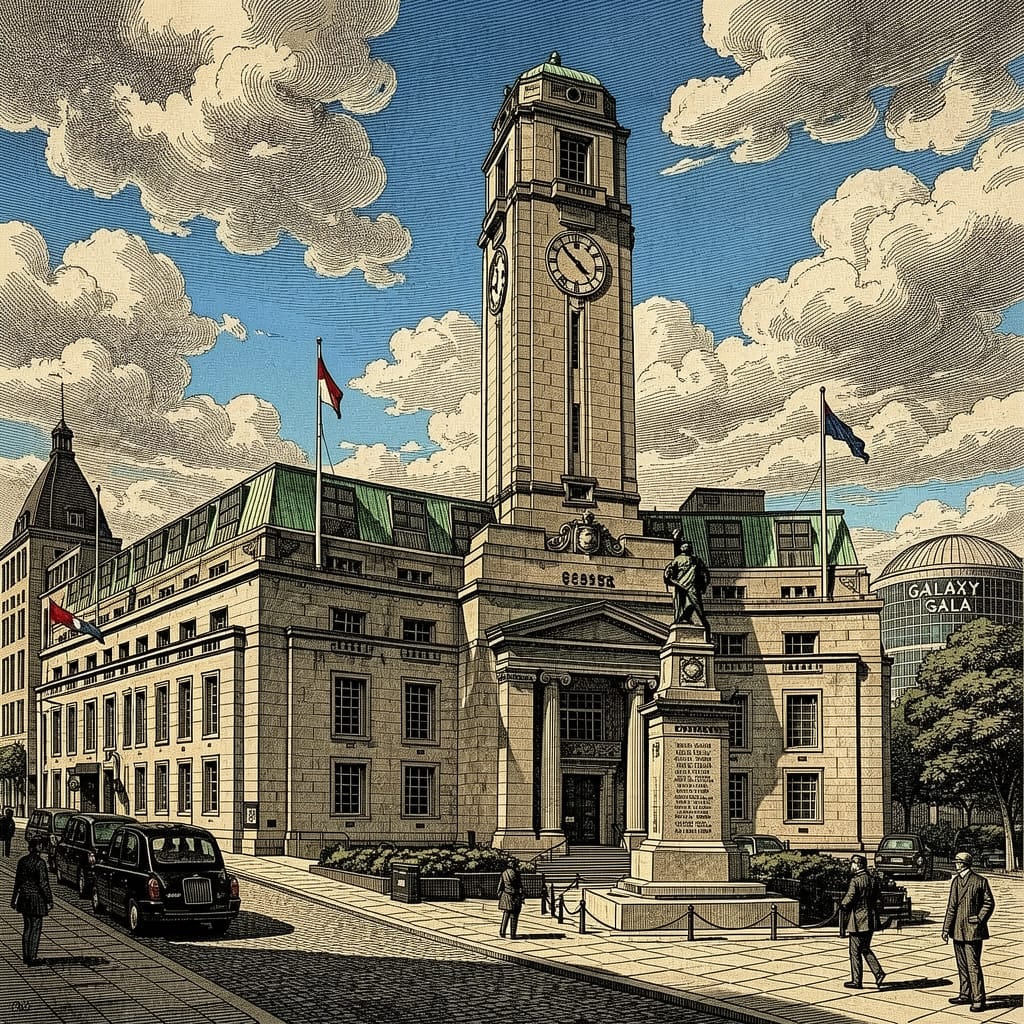
Luton is a large town some 32 miles north-north-west of London, historically part of Bedfordshire and, since 1997, an independent unitary authority in its own right while remaining part of the county for ceremonial purposes. For over two centuries it was defined by a single trade — hat making — before the arrival of car manufacturing and, later, its airport reshaped the town's economy twice over in the space of a century.

Today Luton is known internationally mainly for London Luton Airport, a major base for low-cost air travel, though the town's older industries have left their own marks on its identity, not least the nickname ‘the Hatters’ still carried by its football club.


Geography & Atmosphere

Luton sits in a break at the eastern end of the Chiltern Hills, built along the River Lea, which rises just a few miles away in the Leagrave area of the town, within the ancient woodland of Great Bramingham Wood. The surrounding chalk uplands, now protected as an Area of Outstanding Natural Beauty, close in tightly enough around the town that there are few practical routes through the hills for some distance in either direction — which is precisely why so much has been forced to squeeze through the gap Luton occupies: the M1 motorway, the A6 (itself following the line of the Roman Watling Street), and a main rail corridor all thread through the town within a few hundred yards of one another.

Luton forms a single built-up area with the neighbouring town of Dunstable, on the far side of the M1, and with Houghton Regis to the northwest — together amounting to one of the larger conurbations in the East of England despite Luton's own compact size, at only around seventeen square miles. The town is served by three railway stations, Luton, Leagrave and Luton Airport Parkway, and its two motorway junctions, 10 and 11, put the whole of the M1 corridor within easy reach in either direction.

Its outskirts are a mix of interwar industrial estates, postwar council development and newer housing, ringed by the retail parks and airport infrastructure that now employ much of the town; the older hat-trade streets around Old Bedford Road are among the few parts of the built environment to predate the twentieth century in any visible way.

History

Luton's name carries a curious accident of history. In the early thirteenth century, King John granted the manor to Falkes de Bréauté for his military service; the house de Bréauté built beside St Mary's Church became known as ‘Fawkes Hall’, corrupted over the centuries first to ‘Foxhall’ and eventually to ‘Vauxhall’ — and de Bréauté's heraldic badge, a mythical griffin, survives today as the badge of Vauxhall Motors, the company that would settle in the town some seven hundred years later purely by coincidence of name. The town saw two brief skirmishes during the Civil War, in 1645 and 1648, in which royalist raiding parties demanding money and goods were driven off by Parliamentary soldiers.

Luton's straw and hat-making trade dates back to at least the seventeenth century, exploiting locally grown straw of a quality well suited to plaiting; by the 1930s the town's hatters were producing an estimated 70 million hats a year, and local leaders, wary of resting the whole town's prosperity on one trade, actively courted other industry from the 1870s onward. Vauxhall Motors answered that call in 1905, relocating from a cramped site in south London to a new factory on Kimpton Road — the manufacturer's name and the town's own medieval history colliding, centuries later, purely by chance. General Motors acquired the company in 1925, and Vauxhall's Bedford commercial-vehicle marque, created in 1931, went on to become one of Britain's best-known lorry and van manufacturers in its own right.

The Vauxhall works became a major wartime producer of Churchill tanks and military lorries, making Luton a deliberate Luftwaffe target; air raids killed 107 people and damaged or destroyed over 1,500 homes. London Luton Airport, opened in 1938 as a council-run municipal airfield and used by the RAF during the war, has since grown into one of the country's busiest, and now sits at the centre of the town's economy in a way the old hat trade once did. Vauxhall car production in Luton finally ended in 2002, though the company's van and light-commercial operations continued at the site for another two decades.


Luton Hoo

On the town's edge stands Luton Hoo, a Grade I listed country house built from 1767 for the 3rd Earl of Bute — a former Prime Minister who retreated to the estate after an unhappy spell in office — to designs by the neoclassical architect Robert Adam, with parkland later laid out by Capability Brown. The house passed through several owners, including the Wernher family, before serving as the headquarters of Eastern Command during the Second World War; its grounds, ideal for the purpose, were used to test the Churchill tanks being built at the Vauxhall works nearby, the same tanks that made Luton a bombing target in the first place.


Role in the Saga — Cambion spoilers Covers a genuinely dark turn involving coercion and threat.

Luton is where the consequences of the Natural History Museum manifestation land, in Chapter Thirty-Five: Where Wild Roses Grow. The woman who witnessed Robert's incident leaves her wallet behind; her ID gives Toby and Ben a Luton address, and that same night, once Robert is asleep, the two of them drive down to find her.

What follows is one of the book's starkest demonstrations of how far Toby and Ben are prepared to go to protect the family secret. They break into the woman's house in the small hours, restrain her husband, and confront her directly with the wallet she dropped. When reassurance alone does not seem enough, Ben deliberately shows her what she is being asked to keep quiet about — a flame held steady in his open palm, his eyes gone sulphur-yellow — and tells her plainly that some things are safer not understood. She agrees to say nothing. Neither Toby nor Ben says aloud, on the drive home, what both are clearly thinking: that this was the kind of thing you do not come back from unchanged.

The Luton incident does not stay contained to that night. In Chapter Thirty-Six: Receipt, it emerges that Declan Marsden already knows what happened — his own network erased a police report before it was logged, after the woman called it in regardless, describing “men with demon eyes.” Declan uses that knowledge as leverage over Ben, who has secretly been running off-the-books errands for him in exchange for his silence; the revelation shatters Toby's trust in his brother, and Declan, sensing the opportunity Luton has handed him, escalates his demand from favours to a full, ongoing arrangement.

The thread resurfaces one final time that year. On Christmas Eve 1999, alone in the hallway while the rest of the house sleeps, Ben telephones Declan directly, agrees to work for him full-time, and gives him a final, quiet instruction before hanging up: “Luton. Make it go away.” The single word has, by that point, become shorthand for everything Ben has agreed to become in order to keep Robert safe.



Trivia

  • Luton Town Football Club has been nicknamed ‘the Hatters’ since the hat trade was still the town's dominant industry — a nickname that has long outlasted the trade itself.
  • The old Luton Town Hall was burned down by its own townspeople in 1919, during Peace Day riots by unemployed ex-servicemen who had been refused use of a local park for their own victory celebrations; its replacement was not completed until 1936.
  • The Stopsley area of Luton once had its own brickmaking industry, drawing on local clay deposits — a trade that has all but vanished from the town today, leaving barely a trace next to the hat and motor industries that overshadowed it.

Appearances

Title Role Notes
Cambion
Book One · Book of Thoth Saga
Setting of a coercion incident The site of the break-in and intimidation in Chapter Thirty-Five: Where Wild Roses Grow; the word ‘Luton’ recurs as shorthand for the ensuing blackmail through Chapter Thirty-Six and beyond.